


Quick Summary
Choose a hoodie for lifting by matching its fabric and weight to your gym, checking that it breathes and wicks sweat, and confirming it moves freely through presses, rows and squats. A poly-cotton or performance blend in a mid-weight GSM suits most lifters.
- Blends like 50/50 cotton/poly dry faster and keep their shape better than pure cotton.
- Lower GSM means a lighter, more breathable hoodie, while higher GSM adds warmth and structure.
- Run four movement tests in the hoodie: overhead press, barbell row, lat stretch and squat set-up.
- Tuck or remove drawstrings and keep the hood down during heavy sets to avoid equipment snags.
- Wash in cold water, turn the hoodie inside out, and air dry to protect its fit and print.
Table of Contents
- What a Lifting Hoodie Needs to Do Before You Buy
- Step 1: Pick the Right Fabric and Fabric Weight
- Step 2: Check Breathability and Sweat Management
- Step 3: Test the Fit for Lifting Movement
- Step 4: Match the Hoodie to Warm-Ups, Working Sets, and Cool-Downs
- Step 5: Care for Your Hoodie So It Keeps Its Shape
- Choosing Your Next Lifting Hoodie at Iron Gods
- Frequently Asked Questions
What a Lifting Hoodie Needs to Do Before You Buy
Last Updated: October 30, 2026
Choosing a hoodie for lifting is harder than it looks. Most gym hoodies are designed for warm-up walks, not for heavy sets. The right one needs to handle sweat, allow full range of motion, and survive repeated washing.
Before you compare colors or logos, decide what the hoodie has to do. A lifting hoodie should stay comfortable during warm-ups, keep you dry during working sets, and move with you during pressing and pulling.
Keep these three jobs in mind as you read:
- Protect against cold during warm-ups without causing overheating mid-session
- Move freely through shoulder and back exercises
- Last through regular washing and heavy use
Step 1: Pick the Right Fabric and Fabric Weight
Fabric decides how a hoodie feels, breathes, and wears. Start here before looking at fit or design.
Cotton, Poly Blends, and Performance Fabrics
Each fabric type handles training differently:
- Cotton feels soft and natural but holds sweat and stays wet longer
- Poly-cotton blends dry faster and keep their shape better than pure cotton
- Performance fabrics are built to wick moisture and stretch with movement
The Iron Gods | Official Logo | Workout Hoodie is made from a 50/50 cotton/poly blend. The Iron Gods Make Peace With The Pain Workout Hoodie uses a 60/40 poly/cotton blend. Either way, a blend is a good starting point for lifting.


Reading GSM and Fabric Weight
GSM (grams per square meter) tells you how heavy a fabric is. A lower GSM means a lighter, more breathable hoodie. A higher GSM means more warmth and more structure.
- Lighter fabrics suit warm gyms and high-intensity sessions
- Heavier fabrics suit cold garages, outdoor training, and cooler months
- Mid-weight fabrics work for most year-round lifting
The article compares the main fabric choices and how GSM affects warmth and breathability.
| Fabric or weight | Best for | Key difference |
|---|---|---|
| Cotton | Soft, natural feel | Holds sweat and stays wet longer |
| Poly-cotton blend | Most lifting | Dries faster and keeps its shape |
| Performance fabric | Heavy training | Wicks moisture and stretches with movement |
| Lower GSM | Warm gyms, high intensity | More breathable and lighter |
| Higher GSM | Cold garages, outdoor training | More warmth and structure |
Step 2: Check Breathability and Sweat Management
Heavy lifting raises your body temperature quickly. A hoodie that traps heat will leave you overheated before your working sets begin.
Look for these signs of good breathability:
- A knit that feels open rather than dense when stretched
- Moisture-wicking fibers that pull sweat away from the skin, and a closer look at heavy duty lifting shirts built for the grind shows which options handle sweat and wear best in intense sessions.
- Ventilation through the fabric rather than relying on mesh panels alone
Step 3: Test the Fit for Lifting Movement
Fit matters more for lifting than for casual wear. A hoodie that looks good on a hanger can restrict you once you start pulling or pressing. This section gives you movement tests you can run in a fitting room and construction checks that predict how a hoodie will behave under a barbell.
Shoulder, Lat, and Upper-Back Movement Tests
Run these four tests in the hoodie before you buy. Each one maps to a lift you actually do.
- Overhead press test: Raise both arms straight up, then press an imaginary bar overhead. The sleeves should not pull tight across the shoulders, and the hem should not ride up past your waistband. If the fabric binds at the armpit, the hoodie will fight you on every overhead set.
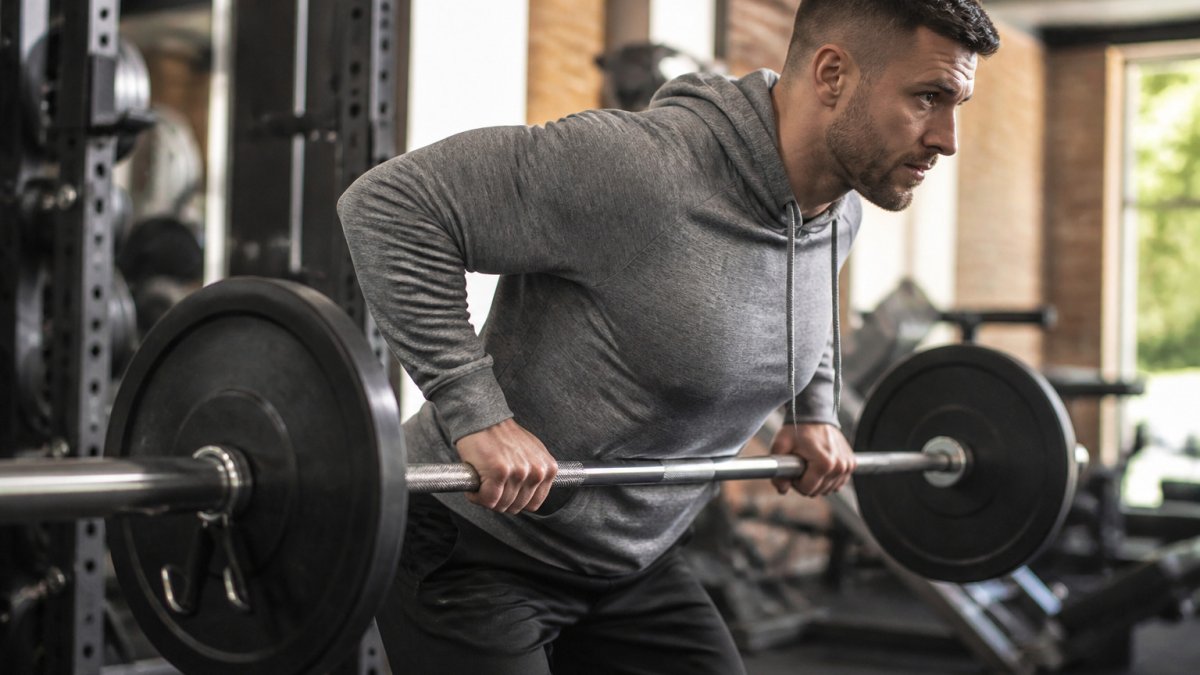
- Barbell row test: Hinge forward to about 45 degrees and pull your elbows back as if rowing. Check that the upper back does not bind and that the hood does not flop forward over your face. A hood that falls forward during a hinge is a sign it will interfere with bent-over rows and deadlift set-up.
- Lat stretch test: Reach one arm overhead and lean to the side. The fabric should move with you without exposing your lower back. Repeat on the other side. Tight side seams are the usual culprit when a hoodie fails this test.
- Squat and bench set-up test: Sit on a bench and lean back as if setting up for a bench press, the hood should not bunch behind your neck. Then stand and squat to depth, the hem should not catch on your belt or bunch at the hips.
A snug fit shows your physique, but it should still allow full range of motion. If a hoodie passes all four tests, it will handle most lifting sessions.
Construction Details That Affect Lifting
Small construction choices decide whether a hoodie helps or interferes with equipment. Check these before you commit:
- Pullover vs. zip-up: A pullover keeps a clean front with no zipper to catch on a barbell or bench pad, but it is harder to remove mid-session when you overheat. A zip-up lets you vent heat between sets and strip it off quickly, but the zipper can dig into your chest during bench press and the open front can catch on equipment. For heavy pressing, many lifters prefer a pullover; for variable-intensity sessions, a zip-up is more practical.
- Hood bulk: A thick, double-layer hood adds warmth but bunches behind your neck during bench press and can block your view when you lean over for deadlift set-up. A single-layer or low-profile hood is less warm but interferes less with equipment. Test the hood by leaning your head back against a wall, if it pushes your chin forward, it will do the same on the bench.
- Drawstrings: Loose drawstrings are a safety hazard around moving equipment and can dangle into your face during bent-over lifts. Look for drawstrings that are short, flat, or stitched down. If you train near cables, racks, or moving bars, tuck or remove them.
Safety and Gym Etiquette
Loose cords, dangling fabric, and overheating are real risks in a gym. Before you train, tuck or remove drawstrings, and keep the hood down during heavy sets so it does not block your vision or catch on equipment. If you feel overheated, remove the hoodie rather than pushing through, overheating impairs performance and judgment. Around moving equipment, keep sleeves and hems clear of bars, cables, and racks.
Iron Gods | Official Logo | Workout Hoodie →
Inclusive Sizing and Layering Fit
If you layer a base layer under your hoodie, size up so the hoodie accommodates both layers without restricting movement. Lifters with muscular shoulders or lats often need a size that fits the chest and back while not leaving excess fabric at the waist. Look for hoodies with stretch in the fabric or a cut that tapers at the waist.
Step 4: Match the Hoodie to Warm-Ups, Working Sets, and Cool-Downs
Many lifters wear one hoodie for the entire session. Your needs change as you move through a workout, so treat the hoodie as part of a layering system rather than a single garment.
Arriving at the Gym
You want warmth without overheating before you start moving. A mid-weight hoodie over a base layer works well here: it keeps you comfortable in a cold car or walk to the gym, and you can remove it once you are warm. If you train outdoors in cold weather, a heavier or fleece-lined hoodie is appropriate for arrival and warm-up.
Warm-Ups
A heavier or fleece-lined hoodie helps keep muscles warm before heavy sets. Wear it through your general warm-up and your first ramp-up sets. As you approach your working weight, pay attention to how you feel, if you are sweating before your first working set, you are overdressed. Remove the hoodie or switch to a lighter layer before your top sets.
Working Sets
A lighter, more breathable hoodie can help limit overheating during hard efforts. For heavy compound lifts, many lifters train in a t-shirt or a light hoodie with the sleeves pushed up or the hood down. If you keep the hoodie on, choose one with low-profile construction (see Step 3) so it does not interfere with the bar. For high-rep or conditioning work, a lighter hoodie or no hoodie is usually better.
Cool-Downs
A hoodie you can throw on quickly keeps you comfortable as your body cools. A zip-up is convenient here because you can put it on without disturbing your hair or headphones. Keep a dry layer for cool-downs if you sweated heavily during working sets.
A Simple Decision Framework
Use this framework to choose what to wear at each phase:
- Cold gym or outdoor training: heavier hoodie for arrival and warm-up, lighter layer for working sets, heavier hoodie again for cool-down.
- Warm gym or high-intensity session: light hoodie or t-shirt for warm-up, minimal layer for working sets, light hoodie for cool-down.
- Variable intensity (strength plus conditioning): zip-up hoodie so you can vent heat between blocks without removing the garment entirely.
If you train in a cold space, layer a warm-up hoodie over a lighter training top, then remove it before your first working set. The key is to adjust layers as your body temperature changes, rather than committing to one hoodie for the whole session.
Step 5: Care for Your Hoodie So It Keeps Its Shape
A lifting hoodie takes a lot of stress. Good care extends its life.
- Wash in cold water to reduce shrinkage and fading
- Turn the hoodie inside out before washing to protect the print
- Air dry when possible, since high heat can weaken elastic fibers
Pick gear that holds up under regular training, and your hoodie will keep its fit for longer. Our guide to choosing durable lifting tees that last covers what to look for in gear built for heavy use.
Choosing Your Next Lifting Hoodie at Iron Gods
Use the five steps above to narrow your options. Look for a fabric and weight that match your training environment, breathability that holds up during working sets, and a fit that moves with you. Then check how the hoodie handles care over time.
If you want a starting point, the Iron Gods Monsters Do Exist Hoodie is a lightweight, form-fitting option designed to show off your physique while you train. Iron Gods provides gear for lifters who value strength, discipline, and the grind.
Frequently Asked Questions
Should you fold or hang your hoodie?
Fold heavyweight cotton hoodies rather than hanging them, because hanging on a thin hanger can stretch the shoulders over time. Fold them flat and store them in a drawer or on a shelf. Wash in cold water, turn the hoodie inside out, and air dry where possible. Heat from dryers accelerates shrinkage and can dull printed graphics, so air drying preserves fit and the screen print.
Can you wear a hoodie while lifting weights?
Yes, but choose one for the job. A lightweight, breathable hoodie works well for warm-ups and cool-downs, where you need extra layers while your body heats up or cools down. During heavy working sets, a fitted hoodie that does not restrict your shoulders or upper back is the better choice. Avoid loose hoods and bulky pockets that can catch on equipment or get in the way of your grip and range of motion.
What fabric is best for a workout hoodie?
A cotton and polyester blend usually gives the best balance for lifting. Cotton feels soft and handles hard training, while polyester helps the fabric dry faster and hold its shape. The Iron Gods Workout Hoodie uses a 60/40 poly/cotton blend, and the Monsters Do Exist Hoodie uses 100% ringspun cotton.
Should a lifting hoodie fit loose or snug?
A lifting hoodie should fit snug through the shoulders and arms, with enough room in the torso to avoid pulling when you move. Loose fits can bunch under the arms during pressing and rowing, while overly tight fits restrict the lats and upper back. Test the fit by raising your arms overhead, performing a row motion, and squatting. If the fabric pulls or rides up during any of these, the size or cut is wrong for lifting.


0 comments