


Last Updated: October 23, 2026
Quick Summary
Prevent gym shirt tearing by choosing reinforced seams and stretch blends over pure cotton, sizing up so seams aren't strained, and keeping fabric away from knurling and rough edges. Wash in cold water, skip fabric softener, air dry, and repair small snags early before they spread.
- Four forces cause most damage: seam tension, equipment friction, sweat, and wash-cycle wear.
- Look for double-stitched or flatlock seams and heavier knits when buying lifting tees.
- If you can't raise your arms without the hem lifting, size up.
- Trim pulled threads with small scissors instead of yanking them.
- Retire a shirt when repairs keep failing or light shows through the fabric.
Table of Contents
- Why Gym Shirt Tearing Happens (and Why It's Not Random)
- How to Choose Durable Lifting Tees That Survive the Grind
- Durable Workout Shirt Fabric: What Actually Holds Up
- Prevent Clothes From Snagging on Gym Equipment
- How to Wash Workout Clothes So They Last Longer
- Quick Fixes for Small Tears and Thinning Spots
- When to Retire a Shirt (and What to Replace It With)
- Conclusion
- Frequently Asked Questions
Why Gym Shirt Tearing Happens (and Why It's Not Random)
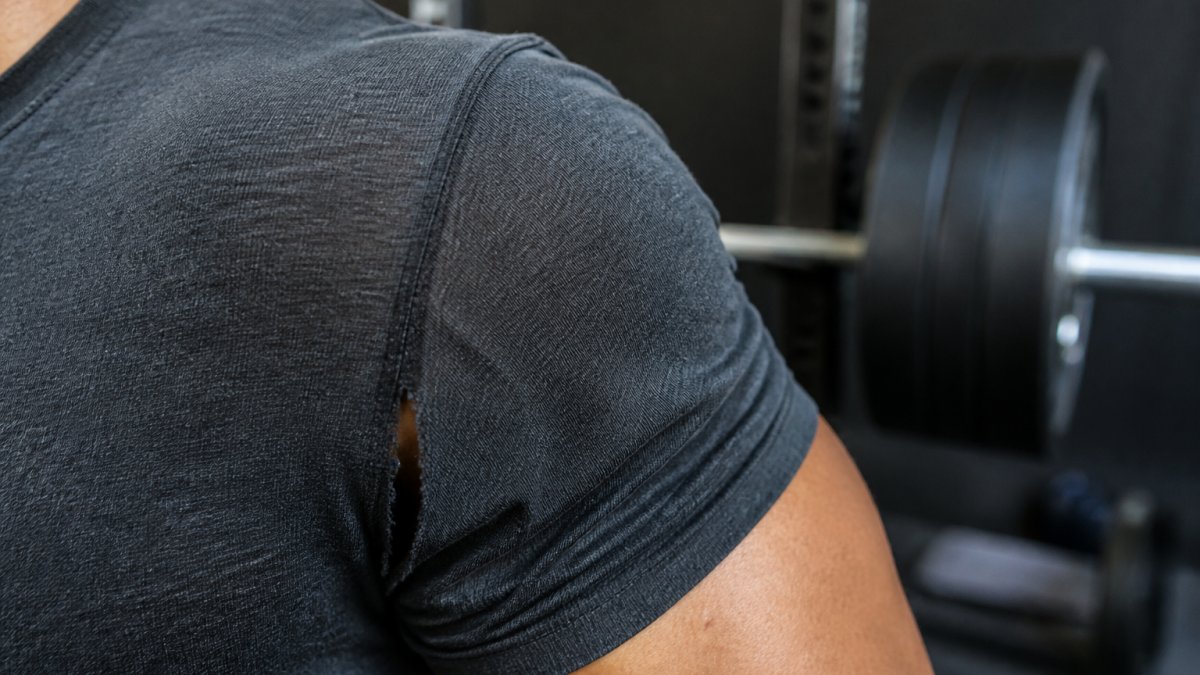
Most lifters blame bad luck when a seam blows out mid-set. The truth is simpler: gym shirt tearing follows predictable patterns, and those patterns point straight to the fix.
A torn shirt is rarely about one bad rep. It's the result of repeated stress on the same few spots.
The 4 Forces That Kill Gym Shirts
Four forces do most of the damage:
- Tension at the seams. Tight shirts pull hard at the armpit and shoulder.
- Friction from equipment. Bars, benches, and cables rub fabric raw.
- Heat and sweat. Moisture weakens fibers over time.
- Wash-cycle wear. Hot water and rough cycles break down elastic.
None of these are random. Each one you control. Fix the forces, and you stop the tears.
How to Choose Durable Lifting Tees That Survive the Grind
The best defense against gym shirt tearing starts at checkout. A durable lifting tee is one built with reinforced seams, a fabric blend that stretches without thinning, and a cut that moves with your body instead of fighting it. Choosing right beats repairing later, every time.
When you shop, check three things before you buy:
- Seam quality. Look for double-stitched or flatlock seams at the shoulders and armpits.
- Fabric weight. Heavier knits resist thinning better than thin, sheer material.
- Stretch direction. Fabric should stretch both ways, not just one.
Fit Check: Tight vs. Snug vs. Strangling
Fit decides how much tension your seams carry. A snug shirt follows your shape without pulling. A tight shirt stretches to its limit every rep. A strangling shirt is already tearing itself before you touch a bar.
Here's how to tell them apart:
| Fit | Feel Test | Tear Risk | Best For |
|---|---|---|---|
| Snug | Moves with you, no pull | Low | Most lifting |
| Tight | Pulls at armpits | Medium | Showcase sessions |
| Strangling | Restricts breathing | High | Avoid entirely |
If you can't raise your arms overhead without the hem lifting past your stomach, size up. Your seams will thank you.
Our Strife Workout T-Shirt is built for lifters who want a second-skin fit without the seam strain, thanks to a stretch-forward blend that moves with every rep.

Durable Workout Shirt Fabric: What Actually Holds Up
Fabric choice is the biggest lever you have. A durable workout shirt fabric resists thinning, holds its shape, and bounces back after sweat and stretch. The wrong fabric does the opposite: it sags, pills, and splits at the seams.
Here's what to look for:
- Blends over pure cotton. Cotton soaks up sweat and stays heavy. Blends dry faster and stretch better.
- Spandex content. A little stretch helps fabric recover instead of staying stretched out.
- Moisture-wicking weaves. These pull sweat away and keep fibers from sitting wet.
Pure cotton feels great on day one. It's also the fabric most likely to stretch and tear under heavy load. Blends hold up longer.
The Assault Dri-Fit Workout T-Shirt uses a moisture-wicking, quick-dry blend that stays light through sweat-heavy sessions, which means less wet-fiber breakdown over time.
Prevent Clothes From Snagging on Gym Equipment
Snags are the silent killer. A single pull on a barbell knurl or a bench edge can start a tear that spreads over weeks. To prevent clothes from snagging on gym equipment, you need to change how you move around the gear, not just what you wear.
Iron Gods Logo Camo Workout Tank →
Try these habits:
- Check bars and benches for rough edges, chipped paint, or exposed metal before you set up.
- Keep loose fabric away from knurling, cable stacks, and plate horns.
- Adjust straps and clips so nothing drags across a sharp surface.
- Inspect your shirt after each session for pulled threads.
A pulled thread is easy to fix early. Left alone, it becomes a hole. Most lifters ignore the first snag, then wonder why the shirt failed a month later.
How to Wash Workout Clothes So They Last Longer
Washing is where good shirts quietly die. Hot water, harsh detergent, and high-heat drying all break down fibers and elastic. Learning how to wash workout clothes the right way adds months to their life.
Follow this routine:
- Turn shirts inside out to protect the outer surface and seams.
- Use cold water on a gentle cycle.
- Skip fabric softener. It coats fibers and traps odor.
- Air dry whenever you can. Heat is the enemy of stretch.
- Wash after every heavy session so sweat doesn't sit in the fibers.
Heat does the most damage. A hot dryer breaks down elastic and weakens seams faster than anything else in your routine.
Quick Fixes for Small Tears and Thinning Spots
Catch damage early and most shirts survive. A small tear or a thinning patch is a warning, not a death sentence. Fix it fast and you delay the replacement by months.
Here's how to handle common damage:
- Small seam splits: Hand-stitch with a needle and thread matched to the fabric color.
- Thinning spots: Reinforce from the inside with a small fabric patch and flexible fabric glue.
- Pulled threads: Trim, don't pull, then secure the loose end with a tiny stitch.
- Stretched-out collars: A quick soak in cool water can help them recover shape.
A repair takes five minutes. A replacement costs money and a return trip. Fix first, replace last.
When to Retire a Shirt (and What to Replace It With)
Some shirts can't be saved. Knowing when to let go saves you from a mid-set blowout. Retire a shirt when seams keep splitting after repair, when fabric is see-through in the light, or when the stretch is gone and it hangs loose.
Signs it's time to replace:
- Repairs keep failing in the same spot.
- Fabric feels thin and rough to the touch.
- The shirt no longer holds its shape after washing.
- You can see light through the fabric when you hold it up.
When you replace, buy for durability, not just looks. Our Engage Dri-Fit Workout T-Shirt is built to fit like a glove while staying soft and light, and our Logo Camo Workout Tank uses a rugged cotton-poly blend made for hard training. Gear built for the grind outlasts gear built for the shelf.


Conclusion
Gym shirt tearing isn't bad luck, and it isn't something you have to live with. Control the four forces, choose fabric that holds up, wash smart, and fix small damage before it spreads. That's how you stop replacing shirts every few months.
At Iron Gods, we build heavyweight, fitted gym apparel for lifters who train like it matters. Our tees are made to support your hardest sessions and remind you that you're stronger than your excuses. Ready to stop babying your gear and start training in shirts built for the grind? Shop Iron Gods and gear up for the long haul.
Frequently Asked Questions
Why do gym shirts tear during workouts?
Most tears start at seams and stress points: the armpit, shoulder blade, and neckline. Heavy pulling and pressing stretches fabric in those spots while sweat weakens fibers. Add friction from benches, bars, and plates, and a thin shirt gives out fast. Cheap cotton blends and oversized fits make it worse because loose fabric catches on equipment. The fix is a durable workout shirt fabric, a snug fit, and checking seams before you load the bar.
Can a tight gym shirt cause it to tear?
A shirt that is too tight can tear, but usually at the seams rather than the body. When fabric is stretched to its limit across the chest and shoulders, every rep pulls on the stitching. The sweet spot is snug enough to stay put but loose enough to move. Look for a bit of stretch in the blend, like the 60/40 poly/spandex used in Iron Gods dri-fit tees, and size up if the armholes dig in.
How do I stop a gym shirt from snagging on equipment?
Prevent clothes from snagging on gym equipment by checking for rough edges before you train. Inspect barbell knurling, cable attachments, and bench seams. Avoid loose hems and dangling drawstrings that catch on plates. On pull exercises, keep the bar path close but not dragging across your torso. If a shirt already has a pull, trim the loose thread rather than pulling it, then use a small fabric patch to stop it spreading.
How should I wash gym shirts to prevent damage?
Turn shirts inside out, use cold water on a gentle cycle, and skip fabric softener because it coats fibers and traps odor. Wash with similar colors and avoid overloading the machine, which causes friction. Air dry when possible; high heat breaks down spandex and shrinks cotton. If you must use a dryer, choose low heat. Following these how to wash workout clothes basics keeps seams intact and fabric strong for more sessions.


0 comments