


Last Updated: November 1, 2026
Quick Summary
Compression shirts are tight, stretch garments that support muscle and manage sweat, while loose shirts prioritize airflow and unrestricted motion. Neither wins outright for lifting: compression helps with muscle stabilization and sweat, but loose shirts win on breathability and comfort in heat. Most serious lifters own both and rotate them by session.
- For deadlifts, tight wins because loose fabric near the bar path is a distraction.
- For squats, a fitted tee is the safer call under a lifting belt.
- Overhead pressing exposes a bad fit fast, so prioritize range of motion over support.
- Breathability is where loose shirts win decisively, keeping you cooler in warm gyms.
- If you're between sizes and press overhead, size up to avoid shoulder restriction.
Table of Contents
- Compression Shirts vs Loose Shirts for Lifting: The Quick Comparison
- Compression Shirt Benefits for Lifting, and Where They Fall Short
- Compression Shirt vs Fitted T-Shirt: What the Difference Actually Is
- Exercise by Exercise: Where Tight and Loose Shirts Win
- Breathability, Sweat and Lifting in Hot Gyms
- The Best Shirt Fit for Lifting Weights: Sizing and Fit Guidance
- Fabric Durability, Care and Gym Etiquette
- Choosing Your Iron Gods Shirt for the Way You Train
- Frequently Asked Questions
Compression Shirts vs Loose Shirts for Lifting: The Quick Comparison
Compression shirts are tight, stretch garments that hug the body and aim to support muscle and reduce fabric movement; loose shirts are relaxed-fit tops that prioritize airflow and unrestricted motion.
Here's the short version. If you train heavy and sweat hard in a crowded gym, a fitted compression layer earns its place.
Below, we'll show you exactly how the two fits differ, what the evidence behind compression claims actually supports, and how to size either one so it does its job.
Compression Shirt Benefits for Lifting, and Where They Fall Short
Compression shirt benefits for lifting center on muscle support, reduced fabric drag, and better sweat handling. The garment holds muscle in place during a rep, keeps sleeves out of the bar path, and wicks moisture instead of soaking it. Where they fall short: they trap heat in warm gyms, they can feel restrictive on the shoulders, and the recovery claims are often oversold.
Muscle support, blood flow and the evidence behind the claims
Compression clothing is generally designed to apply graduated pressure to the body. Evidence quality on its effects varies widely, and results on performance are mixed.
A tight fit can feel more stable during high-rep sets. Whether that translates to more pounds on the bar is unproven. Treat compression as a comfort and support tool, not a strength shortcut.
Fatigue, soreness and recovery after heavy sessions
Delayed-onset muscle soreness shows up a day or two after a hard session, and compression wear is often marketed as a fix. Some lifters report less soreness and a tighter, more supported feeling, while others notice nothing. A shirt does not replace sleep, food, or smart programming.
Compression can reduce fabric shifting during the session, and moisture-wicking fabric helps keep sweat off the skin instead of holding it in cotton.
Lifting-specific trade-offs: belt fit, bar contact, and shoulder restriction
Beyond the general claims, compression shirts interact with lifting equipment in ways that matter. Under a lifting belt, a compression top adds an extra layer that can bunch or shift, especially during squats and deadlifts. Some lifters find the added pressure helpful; others find it distracting. For bench press, a compression shirt keeps fabric tight to the torso, reducing any chance of a loose sleeve catching on the bar or bench.
Compression Shirt vs Fitted T-Shirt: What the Difference Actually Is
A compression shirt is engineered to compress, using high-stretch fabric that applies pressure and fits like a second skin. A fitted T-shirt is simply cut close to the body without applying deliberate pressure.
That distinction matters when you're buying. A fitted tee made from a poly/spandex blend, like the Iron Gods Strife Workout T-Shirt, sits close to the body and is cut to highlight your physique without the squeeze of true compression.

If you want the pressure and support, go true compression. If you want a clean silhouette and freedom through the shoulders, a fitted tee does the job.
Exercise by Exercise: Where Tight and Loose Shirts Win
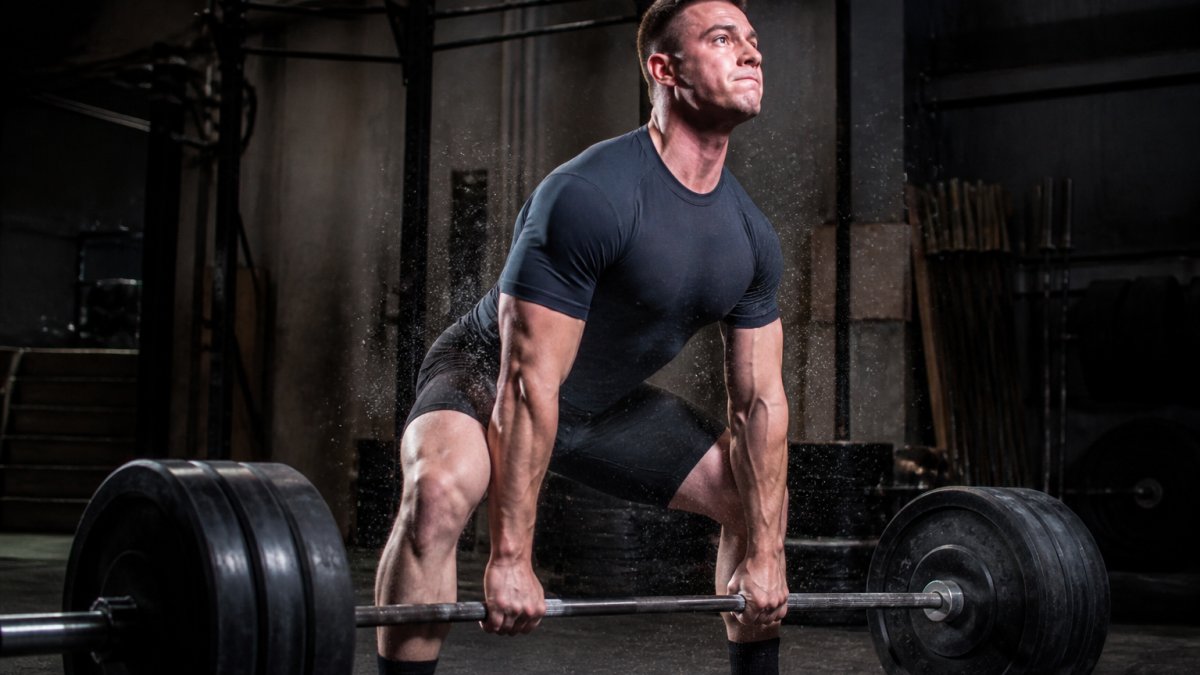
Different lifts punish different fits. Tight clothing wins where fabric drag and muscle movement cost you; loose clothing wins where heat and range of motion matter more.
| Exercise | Better Fit | Why It Wins |
|---|---|---|
| Deadlift | Compression or fitted | No loose fabric near the bar, less chafing on the shins and hips |
| Squat | Fitted tee | Stays out of the way without squeezing the torso under a belt |
| Bench press | Either | Loose works if it doesn't bunch at the shoulders |
| Overhead press | Loose | Full shoulder mobility, no restriction at the top |
| High-rep accessories | Loose | Airflow and cooling matter more than support |
Squats and deadlifts: bar path, belt and fabric drag
For deadlifts, tight wins. Loose fabric near the bar path is a distraction, and a baggy shirt bunches against a belt during setup. A fitted or compression top keeps everything where it belongs. For squats, the calculus shifts: a belt sits over your shirt, and a compression top underneath can feel like an extra layer of squeeze. A fitted tee is the safer call.
Bench and overhead press: shoulder mobility and range of motion
Overhead pressing exposes a bad fit fast. Compression that's too tight limits how far you can reach at the top, and a seam that digs into the shoulder ruins a set. Loose or fitted shirts let the shoulder travel freely. If you press heavy and often, prioritize range of motion over support here.
Breathability, Sweat and Lifting in Hot Gyms
Breathability is where loose shirts win decisively. Air moves through a relaxed fit, sweat evaporates faster, and you stay cooler through a long session in a warm gym.
This is the section where fabric quality separates good gear from cheap gear. A Dri-Fit shirt built to wick and quick-dry, like the Iron Gods Assault Dri-Fit Workout T-Shirt, is designed for moisture-wicking performance, unlike a cotton tee.
Iron Gods Strife Workout T-Shirt →
If heat is your main concern, a loose fit is generally the better choice. If you sweat hard, a moisture-wicking fitted shirt is one option to consider.
How fabric construction affects breathability and sweat
The breathability of any shirt comes down to two factors: air permeability and moisture management. Loose shirts allow air to flow freely around the torso, which helps evaporate sweat even if the fabric itself isn't high-tech. Compression shirts rely on the fabric's ability to wick moisture away from the skin and spread it across the surface for faster evaporation.
When you're lifting in a hot gym, the difference is magnified. A loose cotton tee will soak through and stay wet, weighing you down. A loose performance tee will wick and dry faster. A compression shirt with good wicking fabric will keep sweat off your skin but may still feel warmer because there's no air gap.
Practical scenarios: hot gyms, long sessions, and high-rep work
In a hot, humid gym, loose shirts have a clear advantage because they allow maximum airflow. If you're doing a long session with lots of accessory work, a loose performance tee keeps you cooler and more comfortable. For high-rep sets where you're sweating profusely, a compression shirt can help manage sweat by moving it away from your skin, but only if the fabric is designed for it.
Moisture-wicking vs. cotton: what to look for
Cotton is comfortable but generally holds moisture. Performance fabrics such as polyester and nylon are generally designed to wick sweat away from the skin and dry quickly. When choosing between compression and loose shirts, prioritize the fabric blend over the fit. A loose polyester tee will manage sweat better than a tight cotton one. Check the fabric label before buying, and favor blends with a high polyester or nylon content if you sweat a lot.
The Best Shirt Fit for Lifting Weights: Sizing and Fit Guidance
A good lifting shirt fit stays close to the body without restricting range of motion. Sizing is where most lifters get it wrong, especially bigger guys with wide shoulders and a narrower waist.
A few rules that hold up in practice:
- Measure your chest and shoulders first, not your waist. Lifting shirts are built around the upper body.
- If you're between sizes and you press overhead, size up. Restriction at the shoulder costs you reps.
- If you want the compression look without the squeeze, choose a fitted tee rather than true compression.
High-stretch blends are designed to conform to body shape, which can help with varied builds.
Fabric Durability, Care and Gym Etiquette
Fabric durability comes down to three things: the blend, how you wash it, and how it interacts with equipment. Compression and fitted shirts made from poly/spandex blends are generally more resistant to shape loss than thin cotton, but heat drying and rough washing can still shorten their life. Sweat left sitting in fabric breaks down stretch over time.
Care rules that actually matter:
- Wash cold, inside out, and skip the fabric softener, which clogs wicking fibers.
- Air dry. Heat is what kills stretch and fades prints.
- Rotate your shirts so no single one takes every session.
On etiquette: a loose, sleeveless, or ragged shirt that sheds fibers on a bench is a problem for the next person. For a deeper look at preventing wear and tear, see our guide on how to prevent gym shirt tearing, and if durability is your deciding factor, read how to choose durable lifting tees that last.
Choosing Your Iron Gods Shirt for the Way You Train
Iron Gods offers several tees. Here's how to match a shirt to the session:
- Heavy compound days: the Strife or Engage Dri-Fit tees, both made from a 60/40 poly/spandex blend.
- Hot gyms and high-rep work: the Official Logo Raglan Workout Shirt, a poly/cotton blend.
- Off days: the Titan Series Cerberus Shirt, a poly/cotton blend raglan.
The Strife, Assault and Engage shirts are listed as moisture-wicking, quick-dry, and anti-static. If you're ready to act on the comparison, browse the full lineup in our guide to heavy duty lifting shirts built for the grind. For a same-topic look at how serious-lifter apparel brands stack up, read our Gymshark alternative guide for serious lifters.
Frequently Asked Questions
Are compression shirts better for lifting?
Not automatically. Compression shirts help most with muscle stabilization, reduced fabric drag against the bar and sweat management, which suits high-volume and heavy compound work. They do not add strength on their own, and the research on performance gains is mixed. Loose shirts win on airflow and comfort in hot gyms. Pick based on the lift, the heat and how the fabric sits on your frame, not on a blanket rule.
Do compression shirts improve strength or performance?
Evidence for direct strength gains is weak. What a compression shirt can do is keep muscle movement controlled and cut down on chafing and fabric catching during reps. Any performance edge is small and indirect. Treat compression as a comfort and support choice, then put the real work into programming, sleep and food. A shirt supports the session; it does not replace the training.
Is it better to lift in a tight or loose shirt?
Tight fits suit squats, deadlifts and pressing where you want the fabric out of the bar path and muscle support through the torso. Loose fits suit hot gyms, higher-rep accessory work and lifters who overheat quickly. Many lifters keep both in the bag and switch by session. The wrong fit is the one that restricts your range of motion or bunches under a belt.
Can loose shirts get in the way when lifting?
Yes, in specific spots. Excess fabric can catch on a barbell during cleans or drag across the bench, and a baggy hem can bunch under a lifting belt. Loose sleeves also ride up during overhead work. If you lift loose, choose a shirt with a shorter hem and sleeves that stay put, or tuck the hem before belt work.
Should a compression shirt fit tightly or loosely?
It should fit close and stay smooth, not cut off circulation. You want no wrinkles under a belt, full shoulder range and no riding up at the hem. If the seams dig into your armpits or the fabric pulls across the chest when you reach overhead, size up. A good compression shirt feels locked in, not restrictive.
The right shirt won't lift the bar for you, but the wrong one will distract you on every rep. Choose your fit by how you train, not by what looks good on a hanger. Get started with Iron Gods and train in gear built to keep up with the grind, from moisture-wicking Dri-Fit tees to heavyweight pump covers designed for lifters who show up.


0 comments